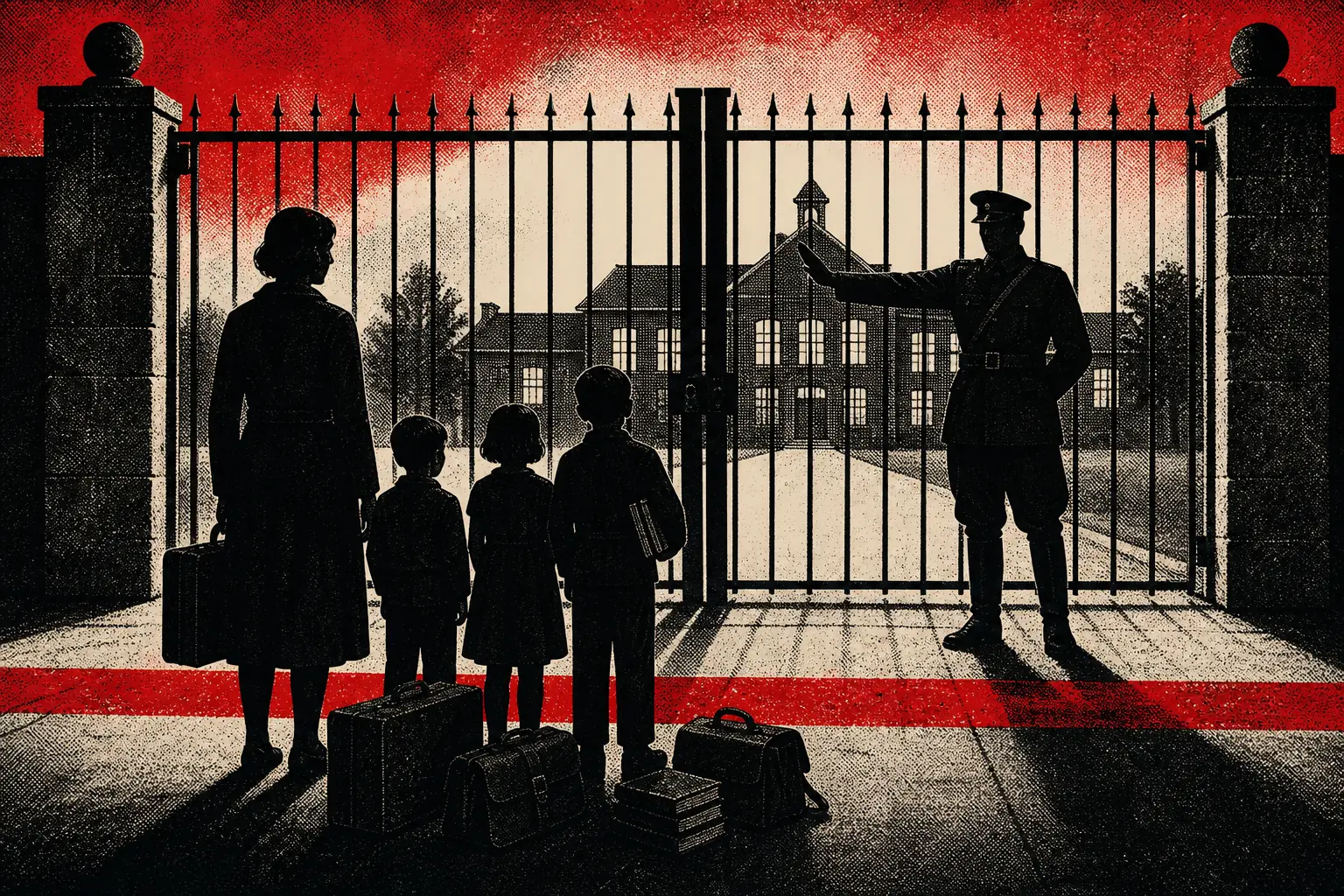
Prop 212 sets one income cap regardless of how many children a family is raising. Measured against the federal poverty line, it means larger families must be poorer to qualify.
Prop 212 cuts off any family earning more than $150,000. It says, in the state's own summary, that the limit applies regardless of the number of children in a family.
Read that again, because it is not an oversight. It is written down.
What $150,000 actually means
A household of three earning $150,000 is comfortable. A household of eight earning $150,000 is stretched thin. Everyone knows this. It is why every income-tested program in American law adjusts for household size.
Measured against the 2026 federal poverty guidelines, that one flat number means completely different things:
- A family of three at $150,000 is at about 549 percent of the poverty line.
- A family of five is at about 388 percent.
- A family of eight is at about 269 percent.
So the bigger your family, the poorer you have to be before Arizona will help with your child's education. That is the opposite of how we build every other benefit.
Democrats do not write rules this way
Food assistance scales with household size. So do ACA premium credits, Head Start, free and reduced-price lunch, and CHIP. Every one of them phases out gradually instead of ending all at once, for a simple reason: cliffs punish people for earning more.
Prop 212 has a cliff. One dollar over the line and the entire award disappears — for every child in the house.
- One child: a $2,000 raise can cost about $7,700.
- Two children: about $15,400.
- Three children: about $23,100.
A parent who picks up overtime, takes a promotion, or has a spouse go back to work can end up thousands of dollars worse off. Economists across the political spectrum have spent decades trying to get cliffs like this out of the welfare system. This measure adds a new one.
And it closes a little more every year
The $150,000 line rises by 2 percent a year, or the GDP price deflator, whichever is lower. Arizona incomes have been growing at roughly 4 percent.
A ceiling that rises slower than wages does not stay where it is. It closes. Every year more families cross a line that never moved toward them, and no future election is required for that to happen. The Common Sense Institute projects that by 2045 more than half of Arizona families with school-age children would be shut out.